Our traditional institutions, leaders, and experts have shown to be incapable of understanding and accounting for the multidimensionality and connectivity of systems and events. The rise of the far-right parties in Europe. The disillusionment of European Parliament elections as evidenced by voter turnout in 2009 and 2014 (despite spending more money than ever), Brexit, and now the election of Donald Trump as president of the United States of America. In short, there is little reason to trust experts without multiple data streams to contextualize and back up their hypotheses.
How could experts get it wrong? Frankly, it’s time to shift out of the conventional ways to make sense of events in the political, market, and business domains. The first variable is reimagining information from a cognitive linguistic standpoint. Probably the most neglected area in business and politics – at least within the mainstream. The basic idea? Words have meaning. Meaning generates beliefs. Beliefs create outcomes, which in turn can be quantified. The explosion of mass media, followed by identity-driven media, social media, and alternative media, is a problem, and we are at the mercy of media systems that frame our reality. If you doubt this, reference the charts below. Google Trends is deadly accurate in illustrating what is on people’s minds the most, bad or good, wins – at least when it comes to U.S. presidential elections. The saying goes bad press is good press is quantified here, as is George Lakoff’s thinking on framing and repetition (Google search trends can be used to easily see which frame is winning, BTW ).


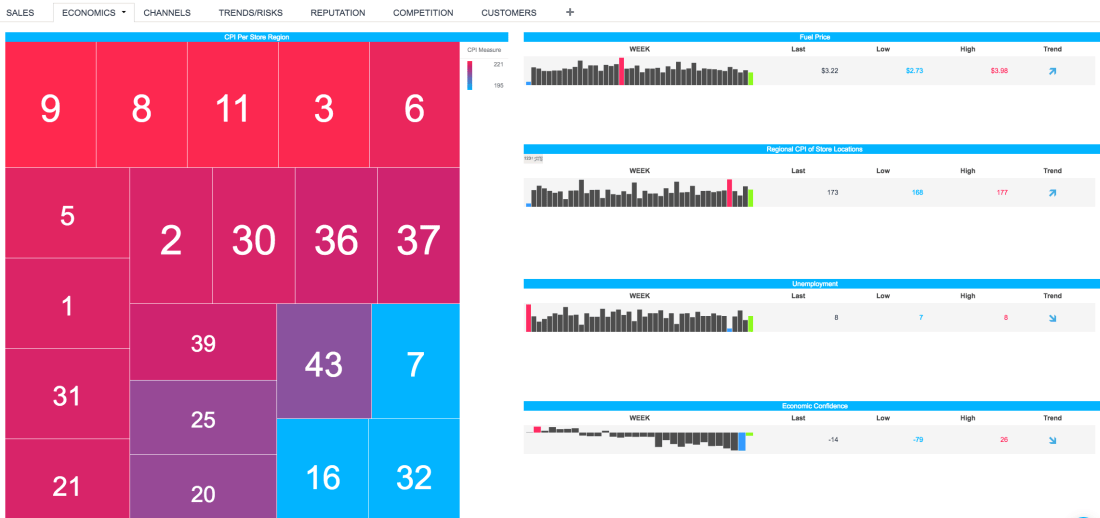
Within this system, there is little reason to challenge one’s beliefs, and almost nothing forces anyone to question their own. Institutions and old media systems used to be able to bottleneck this; they were the only ones with a soapbox, and information was reasonably slow enough. There is a need for unorthodox data, such as open-source intelligence (OSINT) and creativity, which traditional systems of measurement and strategy lack to outthink current information systems. To a fault, businesses, markets, and people strive for simple, linear, and binary solutions or answers. Unfortunately, complex systems, i.e., the world we live in, don’t dashboard into nice simple charts like the one below. The root causes of issues are ignored, untested, and contextualized, which creates only a superficial understanding of what affects business initiatives.

I know this may feel like a reach in terms of how all that is mentioned is connected, so more on OSINT, data, framing, information, outcomes, and markets to come.
Cheers, Chandler

 Machine Lens