For this post, I decided to remain old school and mainly rely on search data. It’s pretty basic, but typically offers a great view of what people are interested in. Google’s market share is around 90% in Europe and it’s the most visited site in the world. In my opinion, Google Trends is the largest focus group in the world.
First I looked at the overall interest in Germany between Angela Merkel and Peer Steinbrück, as well as their political affiliations – the CDU and PSD. Initially, I was curious as to how party identity interest compared to interest in the politician. To anchor this chart I did the same with US presidential campaign (the chart below). I have a hunch, and the data seems to be telling me thus far, that the more media-oriented politics becomes (along with everything else in the world), the more important celebrity, authenticity, and individuality becomes. Take a look at this recent brand analysis done by Forbes. Chris Christie wins, having the highest approval rating of over 3,500 “brands” according to BAV (awesome company) at 78%. For those that don’t know, Christie is probably the most straight forward tell-it-like-it-is politician in the country.
So what can we learn from the Google search interest shown below?


- Politics is still about sheer volume and name recognition. For those that think being novel and unique achieves victory over blasting away nonstop in a strategically framed and coordinated way, think again. People tune out if they aren’t interested. Irrelevance is almost always worse than bad PR or sentiment (excluding a case like Anthony Weiner). You simply don’t win if you don’t interest people. If people aren’t talking about you, you’re not interesting. Merkel had more search interest than Steinbrück and over the course of the year probably got 10,000 times more airtime, both good and bad, due to her large role in the euro crisis. In short, repetition is king.
- Framing and consistent language strategy is vital. Volume can be shown to equate with recognition of a person, but this can easily enough be analogized to a policy or issue. Give me a choice between a clever social media strategy or consistent language strategy, meaning all the key issues are repeated by the party and coordinated as much as possible, and I’ll take the language strategy any day. It’s amazing how just being consistent in political communications is overlooked by companies and political leaders in Europe. Social media tends to be a framing conduit, not the reason people mobilize or have opinions.
- The world is growing ever more connected. Look at how global the reporting of the German election was. Obviously, its importance was higher due to Germany’s rising influence, but none the less the amount of sources from all over the world is impressive. A note for the upcoming EU elections: don’t forget to target the USA and other regions to influence specific regions in Europe. A German constituent might read about a policy from the Financial Times, a Frenchman the Wall Street Journal or an American based in Brussels, who knows Europeans who can vote, Bloomberg.
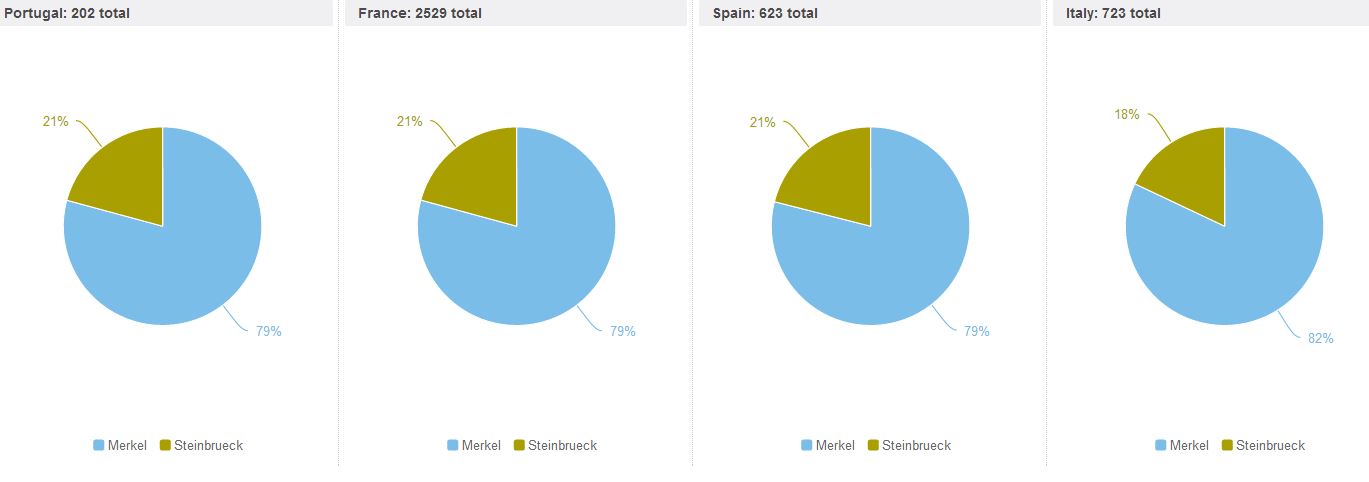
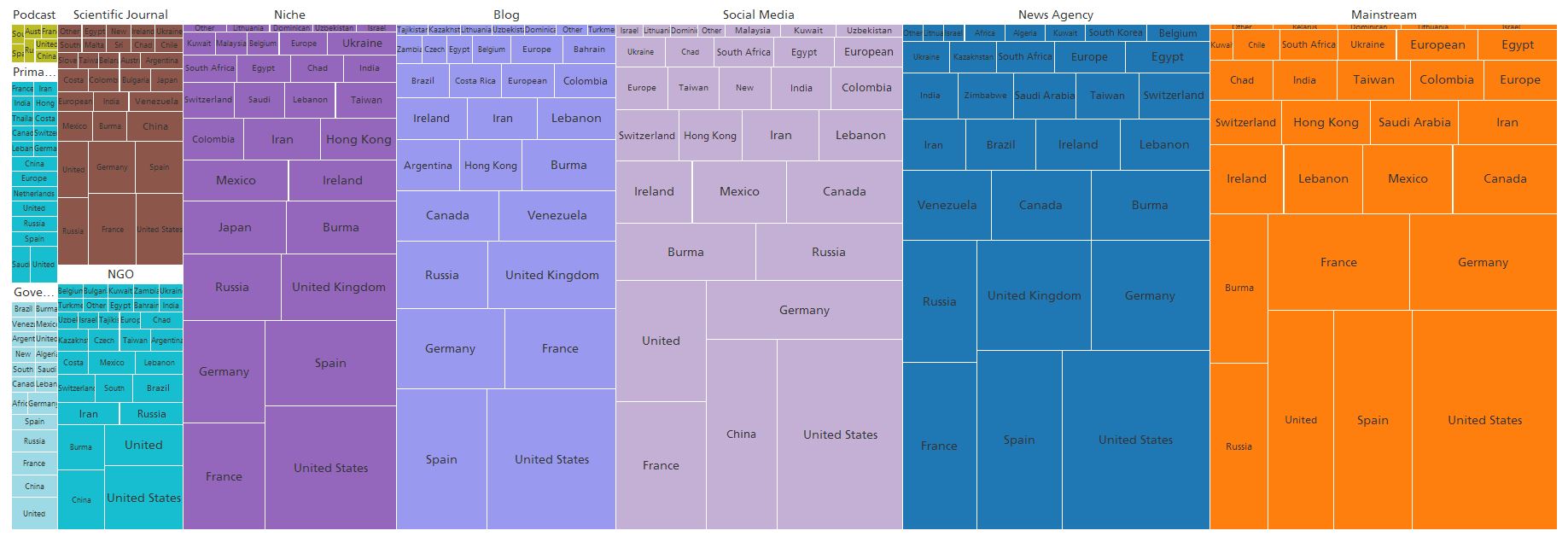 I decided to throw in Twitter market share of the candidates from August 21st to September 21st, the day prior to elections. I found it interesting to see how closely Belgium and the United State reflect Germany, probably because these countries are looking at the elections from more of a spectator view. Meanwhile, southern Europe, which had a vested interest in the election, was pretty much aligned. France, Spain, and Italy seem to report a bit more, and in a similar way, on Merkel – probably due to sharing the same media sources. Unfortunately, I don’t have the time to look into this pattern too much at the moment, but it’s something I’ll continue to think about in the future.


 Machine Lens
One thought on “The German election and EU political communications”