It’s identity not policy
The sooner EU leaders realize nobody cares they will stop complaining about how no one knows who they are.
I’ve worked for both sides in the US. Conservatives are better to be around than Liberals (who are more like EU political actors). in this They are to the point and feel it’s their job to make people understand them. While conservative are not as well thought out, the’re willing to take action, identify enemies them destroy them to the best of their ability.
It’s always Identity over policy.
Thatcher and Reagan proved this in the 80’s, now Sarah Palin and immigration issues in the EU continue to provide fodder..
Branding
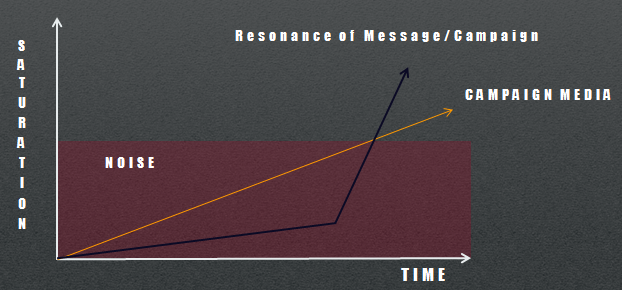
Data shows the need for Critical Mass in today’s communications culture to break through noise. Marketing departments have know this for some time.
Today’s world is less = more.
- Procter and Gamble cut Head and Shoulders product line from 25 to 16. Profits rose 10%.
- General Motors did the same – from eight to four brands. Dealers reported a 16% increase in sales.
In short coalition build, coordinate and communicate the same talking/policy points as much as possible, preferably with an innovator/multiplier in the policy sector.
Politics competes with everything else for relevance. It is not special: Remember these three things when running a campaign:
1) Nobody cares
2) Nobody cares
3) Nobody cares
The EU seems to think politics has a special place in the hearts and minds of people. This Utopia is a place where politics is
compartmentalized like religion and white papers have the same effect as a Steve Jobs presentation. This is Bullshit and one reasons the EU has abandonment issues every election cycle.
Get out of Group think
Group think is great for mobilization and raising money but horrible for expansion. Depoliticizing an issue and presenting to different constituency in a dynamic, empathetic way is a necessity.
- Find demographics by using sentiment analysis and Data mining on the web. This is accurate and cheaper that polling.
- Hire people that are not close to the issues if your goal is to expand popularity.
Political Polarization is not killing politics; It is saving it in today’s real-time media onslaught..
Polarization makes politics clear and to the point. It’s the political parties job to define and marginalize policy to gain ROI. Politics has the luxury of a product that can change with marginal investment. With the right media coordination and framing strategy it’s pretty simple to redefine it to match the line of constituents to gain empathy.
Time, the greatest resource of all
- Instead of writing a 15 page white paper, just go with the idea as long as it’s data based. You will know whether it will works faster – this alone is worth something.
- Use centralized coordination/improvising to deal with adversity but remember centralized planning only exist in theory. Once you are up and running; it’s not effective in allocating communication to the many media outlets, journalist and bloggers in today’s real-time news cycle.
Final thoughts:
Let go of the leash. The chance for returns when taking a risk outweighs not doing something at all. Remember lots of people fail, it’s not that bad.


 Machine Lens