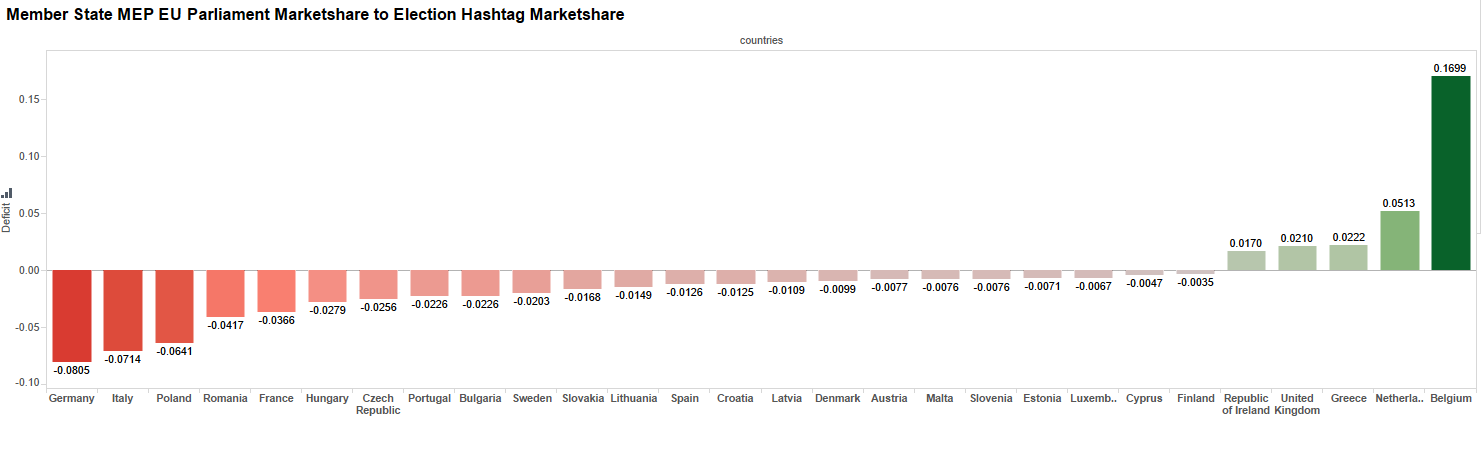
Germany is, without question, the most powerful and important member state in the EU. Everything rides towards, through, and with Berlin. With that in mind, and since Germans have been typically disengaged in EU Affairs, I decided to take a quick look at European Parliament election hashtags (#EP2014, #EU14, and #EU2014) to see which member states are engaging and which ones are not.
A few years back, I worked for the EPP Group, Europe’s largest political party. The future power of Germany was obvious at the time since it was right in the middle of the shit-storm of the Euro-crisis. I started to see how the EPP’s efforts to communicate with the Germans were going. I found out from an analysis of online media that Germans weren’t at all engaged with the EU or their MEPs. The French actually commented on German EPP MEP media more than the Germans. Regarding French EPP MEPs, Germany didn’t return the love. Who did? Believe it or not, the people in the US, keeping a close eye on the global markets, accounted for about 49% of French EPP MEP content comments. Who says US citizens are close-minded? At the time, I felt that comments were a decent KPI to show some interest and engagement, especially since it took a bit more effort – online and social media weren’t as widely adopted. Below is the chart I showed my colleagues at the EPP about 3 years ago. This was before the “big data” hype machine.

Seeing the data, the EPP Group should have focused on changing this deficit aggressively and coordinatedly. You just can’t have a strong EU without an engaged Germany.
Fast-forward 3 years. The EU Parliament elections are coming up. The EU institutions are being questioned, and referendums to withdraw have become focal points in the UK. And there’s lots of money backing this idea. Is this completely because of a disengaged Germany? Not at all. Some of it is just far-right jargon inherent to a bad economy that leaders have very little control over. However, it still makes a big difference when the most powerful member states are apathetic and disengaged.
In the present day, 2014, not much has changed. Although hash-tags are probably not the most precise KPIs and leave a bit to be desired (I needed something quick), the data shows that in proportion to German MEP market share, Germany is still the most disengaged country when it comes to mentioning on EU election-specific hash-tags. What was telling was that Greece had just 62 fewer mentions than Germany, despite Germany being about seven times the size. In fact, only five member states were a net positive (including Greece). Belgium ranked first, obviously, because Brussels is home to most of the EU institutions. The “Brussels Bubble” is alive and well, even though this time it was supposed to be different.

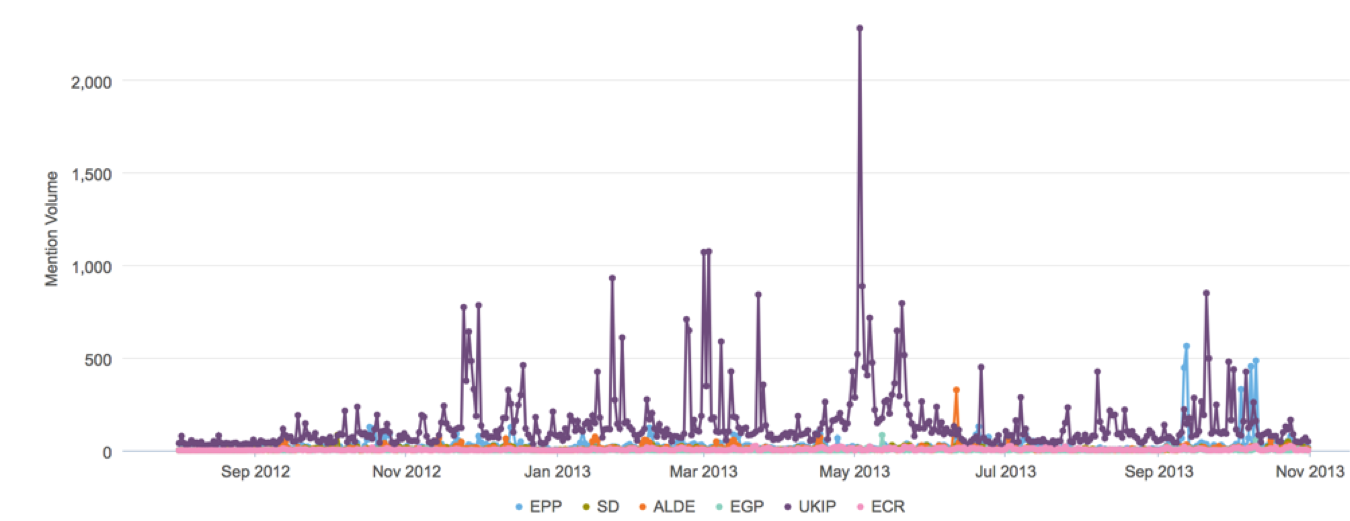
In politics, getting people mad often drives engagement. This sometimes drives voting rates to the parties that many deem unreasonable (Vlaams Belang, Front National, etc). For example, Mr. Farage’s Euro skeptic party, UKIP, has utterly dominated communications compared to the other European Parliament political groups. This isn’t a good thing if you note that the winners usually have more volume of mentions. Surely, Europe is stronger and more competitive together than it is fragmented. Nonetheless, if mainstream parties can’t even figure out how to communicate and run a proper campaign, why should they be trusted with leadership?
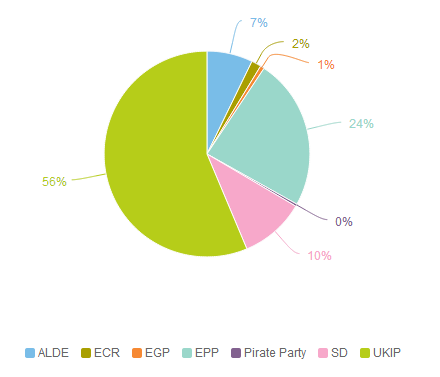
These deficits could have and should have been addressed years ago. You could see them coming from miles away, yet those in power ignored the data or just made half-hearted and superficial efforts to save face. It’s not always easy to lead, and no one expects it to be, but at some point, you have to make bold moves, seek out candor, and take a look in the mirror.

 Machine Lens